Deprecated: Creation of dynamic property WP_Term::$cat_ID is deprecated in /home3/blytheco/thecurrentsouth.com/wp-includes/category.php on line 387
Deprecated: Creation of dynamic property WP_Term::$category_count is deprecated in /home3/blytheco/thecurrentsouth.com/wp-includes/category.php on line 388
Deprecated: Creation of dynamic property WP_Term::$category_description is deprecated in /home3/blytheco/thecurrentsouth.com/wp-includes/category.php on line 389
Deprecated: Creation of dynamic property WP_Term::$cat_name is deprecated in /home3/blytheco/thecurrentsouth.com/wp-includes/category.php on line 390
Deprecated: Creation of dynamic property WP_Term::$category_nicename is deprecated in /home3/blytheco/thecurrentsouth.com/wp-includes/category.php on line 391
Deprecated: Creation of dynamic property WP_Term::$category_parent is deprecated in /home3/blytheco/thecurrentsouth.com/wp-includes/category.php on line 392
Magician, skeptic, and debunker James Randi died on October 20 at his home in Plantation, Florida. He is survived by his husband Deyvi Peña, aka José Alvarez, whom he married in 2013.
Randi was something of a personal hero of mine, or at least as close to one as I allow myself to get. I was fortunate enough to interview him once, and out of the dozens and dozens of interviews I’ve conducted over the years my talk with him, which I am republishing below, always stood out as a highlight.
It was 2008 and I had just gotten a freelance gig with a now-defunct online publication focusing on weird news and intriguing people. It was the vanity project for a (straight) adult film company, and I can’t remember how I came to pitch an interview with Randi, other than I had come to admire his work in the field of debunking supernatural claims and his defense of atheism, which especially at that time was of particular interest.
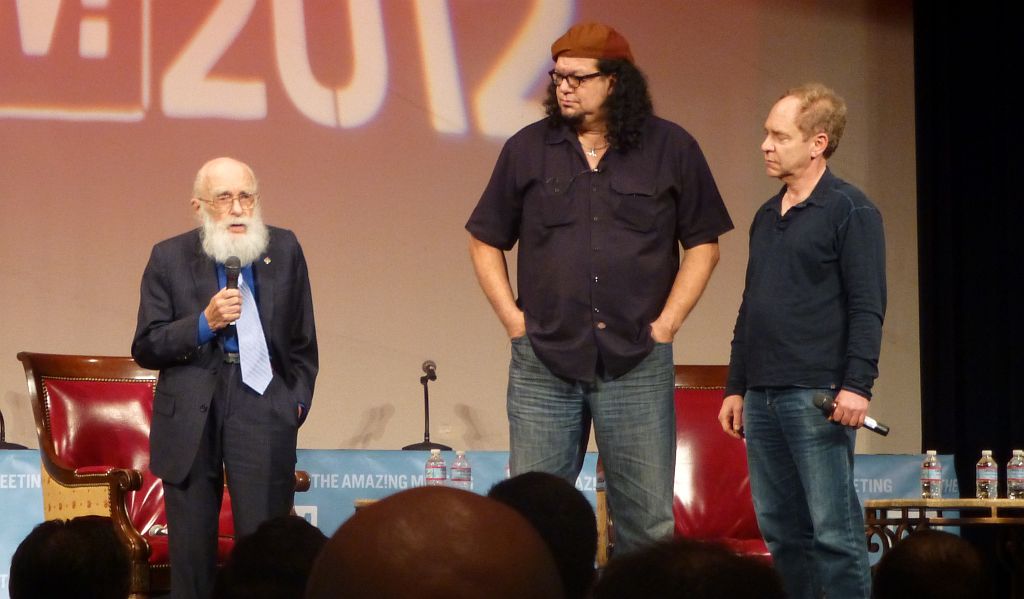
Even by their loose definition of things (pun unintended but recognized), this was probably not the sort of content this mostly sex-focused blog expected to be publishing, but the pitch was approved and I was left to try to somehow manifest an interview with Randi.
I remember being nervous when I called up his office. For one thing, I didn’t expect the pitch to get approved, and secondly, I didn’t expect him to be interested in speaking with an unknown journalist from an unknown, and rather prurient, new publication. But before I knew it, his secretary had put me through and suddenly I was talking to the man himself.
I’m not sure if I even had any questions prepared, expecting at best to schedule something for a later date. Either way, I remember we launched into a comfortable conversation quite quickly, with Randi giving me enough quotable moments for my entire article within probably the first five minutes or so.
When we were wrapping up, I thanked him for speaking with me, apparently with evident surprise that it happened in my voice, as his response came out quickly and with a tone that suggested surprise on his end, and perhaps some mild offense.
“Of course!” he shot back. “It’s what I do!”
Two years later I would learn, coincidentally enough via a social media post from the first guy I ever hooked up with and who had worked with Randi and maintained something of a friendship with him, that Randi had come out of the closet, at the age of 81.
It was inspiring, and it came four years before I would do likewise—or at least publicly, as I had already come out to those closest to me—by casually dropping a reference to my then-boyfriend in a story for Creative Loafing.
I hadn’t read Randi’s coming out statement until now. I am struck by the fact that both of us were moved to come out in part by a Harvey Milk speech. Milk, the first openly gay elected official in California, implored gay people to come out as a revolutionary act to help transform society to a place of greater equality.
“Every gay person must come out,” Milk said. “As difficult as it is, you must tell your immediate family, you must tell your relatives, you must tell your friends if indeed they are your friend, you must tell your neighbors, you must tell the people you work with, you must tell the people at the stores you shop in.”
“In another two decades, I’m confident that young people will find themselves in a vastly improved atmosphere of acceptance,” Randi said in his statement.
After one decade since that statement we seem to be sitting at something of a crossroads.
While those words seem to be in-process of being proven true when looked at under a certain light, one is also left wondering how vastly improved the atmosphere really is, with the gains of the Obama administration being rolled back under the Trump presidency. What the situation will look like in another decade is beginning to feel more like anyone’s guess than in recent years.
But we can do as Randi always did and continue fighting for truth and light. We can keep exposing the lies, and keep learning to live honestly, leading by example. We can remember, as Milk and so many others taught us, that the personal is political, and we can work to make a better future for the next generation, no matter our age, no matter our fears, and no matter what the “grubbies,” as Randi called the haters, might think.
My interview with Randi from 2008 follows:
Professional Skeptic Pits Science Against Psychics
By Jeff Taylor
FORT LAUDERDALE, Fla. (TNA) – After decades of investigating the claims of mediums, faith healers, psychics and flim-flam artists of every stripe, 79-year-old magician and skeptic James Randi is not surprised that people still fall for the huckster’s pitch.
“They want to believe because they want some magic,” Randi says.
While he is often referred to as a debunker, Randi prefers to call himself an investigator.
“Debunking would mean that you already go into it determined that this is not so,” he explains. “I can’t afford that luxury, so I go into it saying I’m an investigator. I’m looking at the situation to find out whether or not it is so. So, I don’t debunk, I investigate.”

The job calling came early for Randi, born of an incident that took place when he was just a boy.
“I was about 14 years-old at the time,” Randi says, “and there was a faith healer in the area, and I saw what the faith healer was doing and how he was doing it. I saw that people were going to be hurt by it, and I determined that it was about time that somebody did something about it, and I thought someday I will do something about it. The time eventually came along where I could do exactly that.”
As for his continued dedication, he explains, “It’s pretty much like a fellow who signs up to be a lifeguard or something. Would it be important for him to keep jumping into the water to save people from drowning?
“I’m in a position where I have the expertise to be able to do this sort of thing, and it would be derelict of me to not use my expertise, and my special knowledge and experience, to challenge people making these claims.”
In a kind of “takes one to know one” approach, Randi, who once performed magic around the world under the stage name The Amazing Randi, notes that his initial profession left him perfectly prepared for the work he does today.
“Magicians have, if they want, the expertise to solve how these things are done, and to explain them, because that’s where our expertise lies,” Randi says.
“We know how people are fooled and, more importantly, know how they fool themselves,” he explains. “So, we’re just about the only people who can really attack the problem and try to do something about it. And I’ve been trying to do that for 61 years now.”
In those 60-plus years, Randi has publicly defamed such high-profile psychics as James Hydrick and Uri Geller, and the Evangelical faith healer Peter Popoff.
Just like Hydrick, Randi moved pencils and turned the pages of a telephone book, all without laying hands on the items. He bent spoons and keys, seemingly with the power of intention alone, like Geller.
The difference, of course, being that Randi openly demonstrated that it didn’t take psychic abilities to successfully pull off such stunts – merely a good blast of surreptitiously blown air on the one hand, and a thorough bout of pre-bending on the other.
As for Popoff, Randi famously exposed him in 1987 on “The Tonight Show.”
While a guest on the program, Randi played transmissions he’d intercepted while attending some of Popoff’s shows.
The tapes clearly bore witness to the fac壯陽藥
t that Popoff’s wife had been feeding Popoff previously obtained information about audience members through an earpiece. This ultimately led to Popoff filing for bankruptcy.
Within the past few years, however, Popoff and his miraculous claims have returned to late-night television.
Randi notes there will always be people willing to “turn to pseudoscience, to witches and to mediums, and various other people who promise miracles, when the world doesn’t quite live up to expectations.”
For more than 40 years, Randi has offered a prize, which started at $1,000 and now stands at $1 million, to anyone who can prove they possess supernatural powers.
Until April of this year, the challenge was open to anyone who wished to apply. Those looking to claim the prize these days, however, must be supported by an academic, as well as a media outlet of some kind.
“We were getting applications from people who were nuts,” Randi explains. “People who thought they could fly by flapping their arms, or control trees at a distance. I felt we were harming these people by entertaining their fantasies, instead of sending them to psychiatrists.”
In addition to dismissing the claims of the obviously mentally ill, the rule change is expected to free up funds that could be used to lure well-known mediums like John Edward and Sylvia Browne to take the challenge.
The plan also involves launching a more aggressive media campaign.
Browne agreed to take the challenge on two separate occasions back in 2001, each time as a guest on CNN’s “Larry King Live.” However, she has thus far failed to come forward to be tested.
In Randi’s opinion, meeting the new requirements shouldn’t be too difficult.
He says a hopeful applicant can “go to any local newspaper and say that they can fly by flapping their arms, or make whatever claim they want to make, and the paper will get a funny story about a nutcase who says he can fly by flapping his arms. That’s always news for small-town papers in particular, who tend to dote on this sort of thing.”
As for the second stipulation, Randi claims, “Some academic someplace will really believe they can do what they say they can do.
“Physicists, particularly, are very fond of endorsing people who make these kinds of claims, because physicists say, ‘Well, we know everything. We’re superior to most people because we have very high IQs and are very well-educated, so we can’t be fooled.’ But they are usually the first people to be fooled by magicians, and by other people who are purposely deceiving them.”
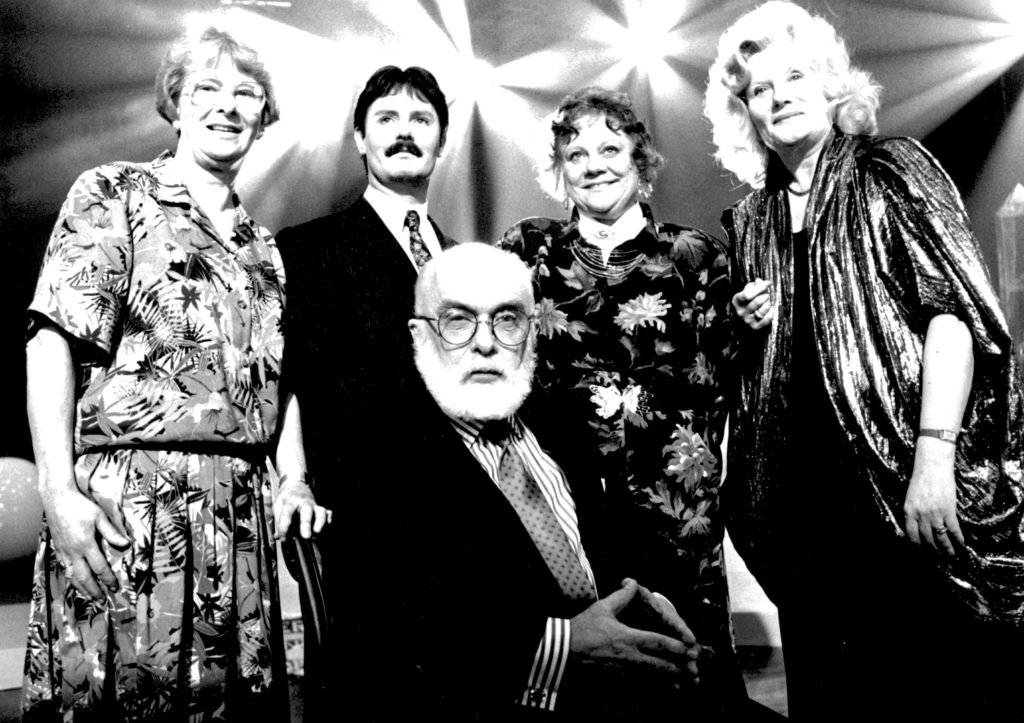
Another prize given by Randi’s organization – The James Randi Educational Foundation – is the farcical Pigasus Award, which “honors” those supporting fraudulent claims of the paranormal.
The award, which was first given 25 years ago when it was called the Uri Award, does not come with a monetary sum like the Million Dollar Challenge. The recipient does, however, receive a plaque featuring a winged pig.
Handed out each year on April 1, the award is now given to four people, or organizations, in four different categories: Scientist, Funding, Media and Performer.
The most recent recipients of the award were: Biologist Rupert Sheldrake (for researching his theory of “telephone telepathy”), the Templeton Foundation (for spending $2.4 million, and 10 years, researching the effectiveness of prayer on hospital patients), Montel Williams (for his continued support of Sylvia Browne) and Uri Geller (for refusing to fade away, as he appeared on Israeli TV, where he moved a compass using a magnet).
“We haven’t had a problem finding likely candidates,” Randi says, pointing out, “The world is just full of them. They’re all over the place. In fact, it’s hard to make a decision as to who most deserves to receive the award.
“People don’t try and win it,” Randi concedes. “In fact, they fail to apply for it, which astonishes me. You’d think there’d be a line of people wanting this special honor.”
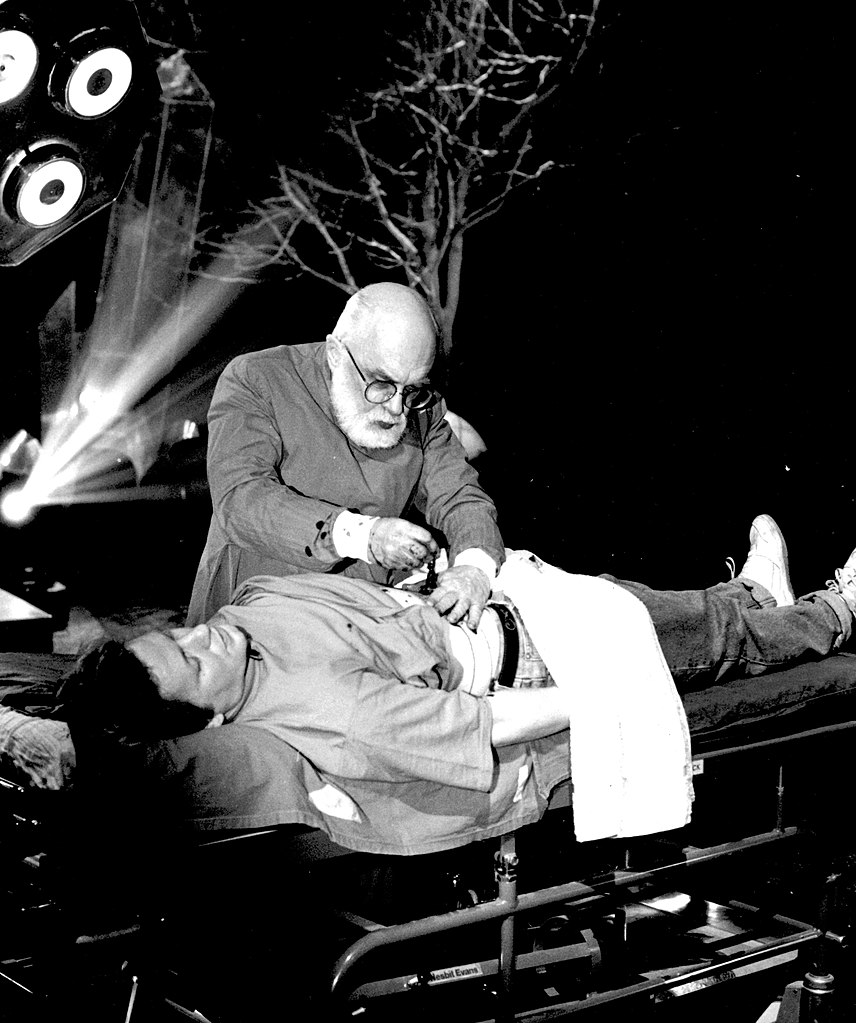
Randi was born in Toronto, but became an American citizen due, in part, to an incident that took place in 1974 while on tour with Alice Cooper.
“I was traveling with the Alice Cooper show, and in Niagara Falls I saw the RCMP (Royal Canadian Mounted Police), which is roughly the equivalent of the FBI in the United States, raid the dressing rooms while all the actors were out onstage,” Randi says.
“I had to come back for a costume change,” Randi continues, “and I saw them with crowbars, prying the doors off the lockers that were there in the dressing rooms.”
“They were scattering everything around, and destroying everything, stomping on everything, because they hated the Alice Cooper show. They decided it was an evil thing, and they wanted to show them who was boss. They pretty well destroyed the whole operation.”
Always one to speak up, Randi asked them what they were doing.
“When I questioned them,” he says, “they threatened me and said I’d be locked up. I told them they better have very good grounds, because I was a Canadian citizen. That made them back off. They didn’t know how to react to that.”
Unwilling to let the incident go unreported, Randi turned to the media.
“I went to the local newspapers and complained to them,” he says. “They just looked me straight in the eyes and said, ‘Look, in Canada, we don’t question that (sort of thing). We just turn the other way, and we take our lumps and we lick our wounds.’
“So I thought, what the heck, they act like a bunch of children there, I don’t belong there any longer. I’ll just become an American citizen, and I did.”
Whichever country Randi decides to call home, it appears he will always remain dedicated to his work as a skeptic.
What’s more, he accepts that he too may be duped one day, saying, “Anyone can be fooled. I can be fooled. It can happen. I don’t know the last time that it did happen, but it could happen, certainly. I’m prepared for that.”
Anyone planning to do so, however, and grab a quick million in the process, will have to be well-practiced. Not to mention fairly well-connected.
To learn more about James Randi, and the Million Dollar Challenge, visit The James Randi Educational Foundation at www.randi.org.
]]>